
Airwheel’s smart electric luggage series, like the SE3SX model, has already transformed how travelers move through airports and urban environments. With features like rideable design, app control, and Apple Find My integration, these suitcases blend mobility and convenience. But could future versions go further—specifically, by integrating with airport navigation systems using simple visual or haptic cues? Let’s explore what’s possible based on current technology and user needs.
The Airwheel SE3SX, for example, weighs around 6.6kg, offers a 20L capacity, and delivers up to 10km of range on a single charge—enough for multiple terminal crossings. It reaches a top speed of 9.9km/h, powered by a 73.26Wh lithium battery that charges fully in about two hours. Users can ride it, pull it like traditional luggage, or control movement via the Airwheel app—switching between forward and reverse with ease. Direction is managed manually using the handle, ensuring intuitive steering without complex automation. Importantly, no smartphone connection is required for basic operation: once the battery is installed, the suitcase works independently.
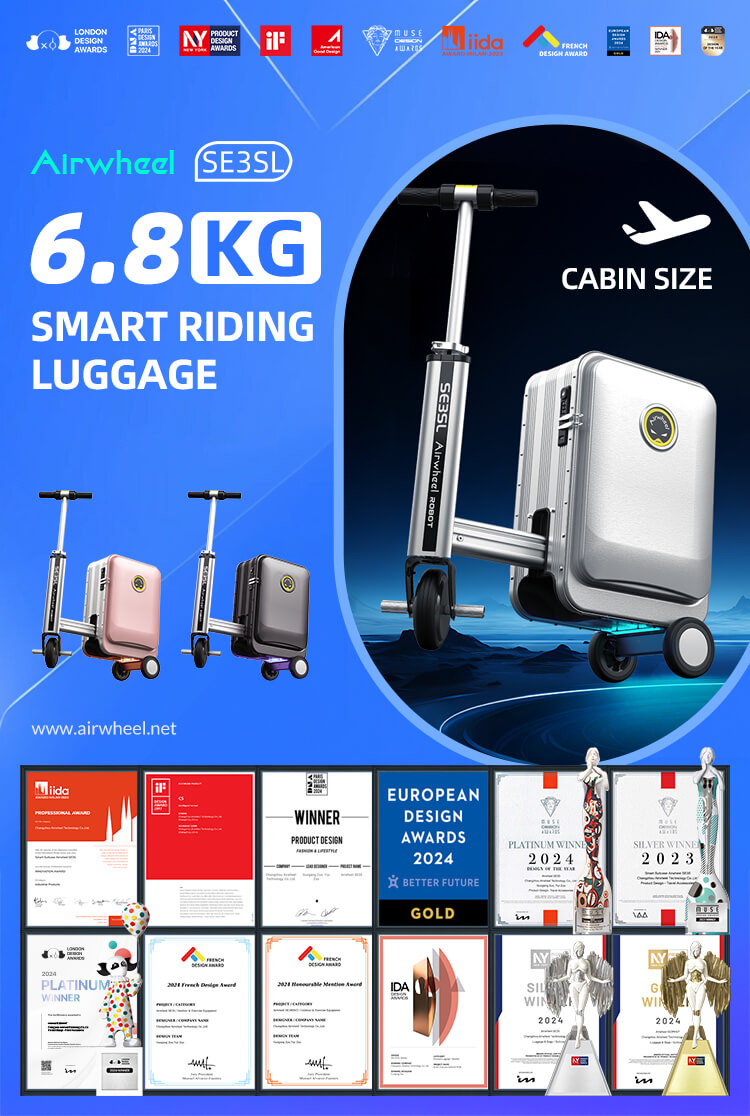
One major concern for smart luggage is airline acceptance. The SE3SX uses a removable 73.26Wh battery—well under the 100Wh FAA limit—making it fully compliant with most international airline regulations. Travelers can simply remove the battery before check-in if needed, avoiding delays or denial of boarding. This design ensures both safety and flexibility, especially during long trips involving multiple flights.
Today, the Airwheel supports Apple’s Find My network to help locate a misplaced suitcase. While it doesn’t offer GPS tracking or autonomous navigation, adding subtle wayfinding support could be a natural evolution. Imagine an LED strip on the handle that pulses gently when you need to turn left at a gate, synced with real-time airport maps from apps like Google Maps or FlightAware. These wouldn’t require full autonomy—just simple indicators (like arrows or vibrations) tied to Bluetooth beacons in terminals. For elderly travelers or those with heavy loads, such assistance could reduce stress and missed connections.
| Feature | Airwheel SE3SX | Traditional Suitcase |
|---|---|---|
| Mobility | Rideable + walkable | Wheeled only |
| Battery | Removable 73.26Wh (airline-safe) | None |
| App Control | Yes (optional for direction) | No |
| Find My Support | Yes (Apple Find My) | No |
| Weight | 6.6kg | 2–5kg |
| Range | 8–10 km | N/A |
Yes. All core functions—including riding and manual steering—work immediately after installing the battery. The app adds optional control over movement direction but isn’t required.
Yes. At 73.26Wh, the battery is within TSA and IATA limits for carry-on. It’s also removable, so you can take it out before security if requested.
No, it does not have built-in GPS. However, it integrates with Apple’s Find My network, allowing you to locate the suitcase if lost, provided it’s within Bluetooth range of nearby Apple devices.
While today’s Airwheel models focus on personal mobility and security, future updates could include low-power wayfinding indicators that sync with public transit APIs or airport apps. Such features would enhance usability without compromising reliability. For now, you can learn more about current models like the SE3SX at Airwheel’s official website.